
What is a production hall and its characteristics
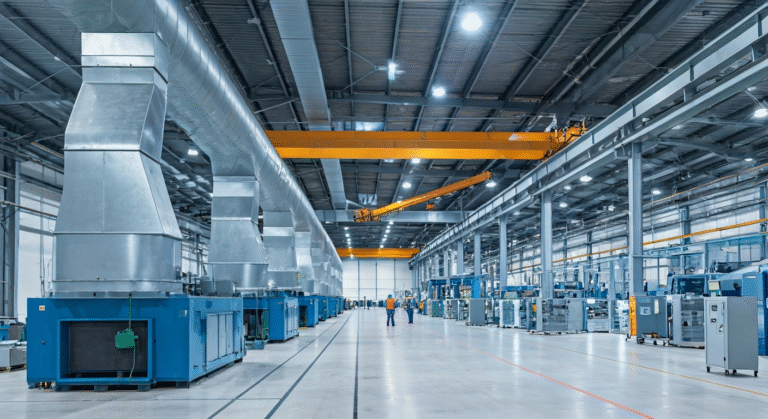
Production Hall is a space where companies carry out their production processes. It is typically characterized by a large floor area, which allows for the optimal arrangement of machinery and equipment. This enables an increase in production efficiency and output.
However, production is not everything. It is important to provide a social area for the staff, where they can rest and eat a meal . These areas provide employees with comfort and are an integral part of the hall's design, which should consider both production and personnel needs.
Additionally, production halls often feature ventilation and air conditioning systems that ensure proper air circulation . This is crucial for the health of people working in such an environment . The hall's construction must also meet specific technical and regulatory standards, which ensures the safety and durability of the facility throughout its operation.
Basic requirements for a production hall
A production hall should meet specific standards to ensure both safety and comfort for employees In particular, during the heating season, the indoor temperature must not fall below 14°C. Additionally, the height of the rooms must be at least 2,5 metra. Hygiene and sanitary facilities, which the employer is obliged to provide, are also an important aspect. All these factors have a key impact on occupational safety and production efficiency.
Technical requirements and legal regulations
Technical requirements and regulations related to production halls play a crucial role in ensuring safety and legal compliance . The building design should meet standards concerning construction, materials used, applied technology, and safety systems . In Poland, these principles are defined by the Building Law and OHS regulations.
Every production hall must be equipped with appropriate infrastructure, which includes:
- transport availability
- location impacting operational efficiency
The location of the plant is important for the availability of the workforce and logistics, which is crucial for production processes.
Regulations also require appropriate ventilation and heating systems to ensure thermal comfort and healthy working conditions. The hall's structure should be resistant to adverse weather conditions and also comply with standards regarding load-bearing capacity and stability.
The construction project must also consider environmental regulations to minimize the impact on the environment.
All these elements are essential for the planning and implementation of manufacturing halls, to be compliant with regulations and safe in operation.
Must there be ventilation in the production hall?

Ventilation in a production hall plays a crucial role in maintaining clean air and working comfort. These systems eliminate contaminants, such as dust or chemical fumes, which significantly increases safety, protecting the health of employed individuals. Furthermore, well-designed ventilation contributes to better production efficiency. Thanks to it, the hall maintains an appropriate microclimate, which allows employees to operate in favorable conditions. This directly translates into their effectiveness and a reduction in the risk of occupational diseases.
How many air changes per hour in the production hall?
The number of air changes in a production hall depends on the nature of the processes and air quality requirements. Typically, 6 to 12 changes per hourare recommended, which is crucial in areas where intensive technological processes cause contamination.
The selection of the ventilation system, however, should be tailored to the specific needs and conditions prevailing in the facility Additionally, current OHS regulations and other legal provisions related to occupational safety must be taken into account.
Minimal temperature and height of rooms
During the heating season, the temperature in the production hall should not fall below 14°C. 14°C. Maintaining such a level of warmth is important for the comfort and protection of working personnel . The space must be at least 2.5 meters high, which ensures adequate air circulation and enhances safety . Adhering to these rules is essential for the plant to operate in accordance with technical regulations.
The process of building a production hall
Starting the construction of a production hall requires the development of a detailed architectural plan. Such a project considers all aspects of construction, which is crucial for future costs and the efficiency of the facility. A carefully planned hall can provide long-term savings, thanks to effective space utilization and modern technological solutions.
The next stage is obtaining the necessary permits and administrative approvals, which is a condition for commencing construction works. After obtaining them, earthworks and foundation work begin . Foundations are crucial because they form the base of the entire structure.
Subsequently, the steel or reinforced concrete structure is assembled in accordance with the design. It should meet all technical standards and regulations to ensure durability and safety. Next, internal systems such as electrical installations, ventilation, and security systems are installed. One must also not forget about the interior finishing, which must comply with production requirements and provide comfort to employees.
Upon completion of construction, technical acceptance and the acquisition of an occupancy permit take place . It is crucial that each stage is carried out in accordance with the plan and applicable regulations, which will ensure that the production facility is safe and functional for many years.
Construction Project – Key Aspects of Construction
Designing a production hall focuses on ensuring the durability, efficiency and cost-effectiveness of the structure.. Meeting appropriate technical standards is crucial, guaranteeing longevity and efficient operation. The choice of materials and modern technologies is important for the economics and durability of the building. Project efficiency affects operational costs, therefore it is worth implementing optimal technological solutions . Additionally, modern design and construction techniques can bring significant savings in the future.
Hall Construction – Durability and Efficiency
The building's structure is key to its durability and efficiency. The appropriate selection of materials and modern technologies determines the longevity of the facility . It must be resistant to various weather conditions and meet load-bearing standards, which guarantees stability and safety.
In the construction of halls, materials often used include:
- steel valued for its strength and speed of assembly,
- concrete providing solidity and fire protection, which increases the level of safety,
- aluminum, although lighter, effectively protects against corrosion.
Modern technologies, such as prefabrication, enable the rapid and efficient construction of structures. Prefabricated elements accelerate the construction process, which reduces costs and shortens downtime periods. Additionally, innovative insulation systems enhance the building's energy efficiency.
For the hall to be efficient, the integration of ventilation, heating, and lighting systems is necessary . This has a significant impact on work comfort and production efficiency. Therefore, the selection of appropriate technologies and materials plays a crucial role in ensuring the durability and functionality of the hall.
Building Materials and Technologies
Prefabricated steel structures and sandwich panels play a significant role in the construction of production halls. Steel structures are characterized by high durability and quick assembly, which greatly enhances the efficiency of the construction process. On the other hand sandwich panels, composed of two layers of sheet metal and an insulating core, provide excellent thermal and acoustic insulation. The use of these materials allows for shortening project implementation time and reducing operational costs.
Additionally, the application of modern technologies, such as prefabrication, increases the efficiency and durability of structures, which is crucial for the long-term use of the building. The use of prefabrication enables faster construction and minimizes the risk of execution errors, which translates into the quality of the final project.