
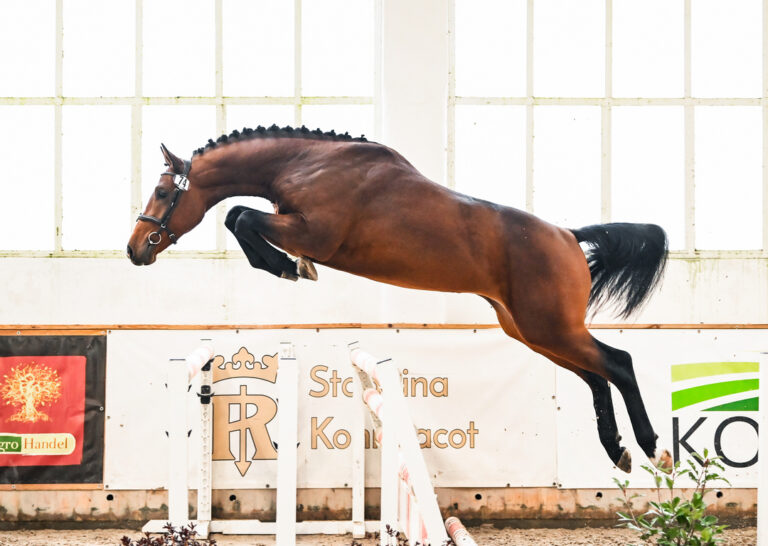
Construction of an equestrian hall step by step – what does the investment process look like?
A riding arena is the foundation of the business for every professional equestrian center. Such a facility allows for conducting classes all year round, organizing competitions, and providing a comfortable space for training regardless of the weather.However, investing in an indoor riding arena requires careful consideration of many aspects – from design to installation. Below, we explain how the entire process unfolds and what to pay attention to at each stage.
How does the construction of a riding hall begin?
The first stage is the precise determination of needs – both functional and spatial A horse riding arena can serve various functions: be solely a training hall, be part of a larger complex with a stable and facilities, or even serve as a venue for organizing competitions. Already at the design stage, it is worth determining the anticipated number of horses and riders, the type of activity conducted, and the expected intensity of arena usage.
For the sake of riding comfort and user safety, the placement of gates, access to natural light, and ventilation are also important . The design of the stable with a riding arena should also consider the hall's orientation relative to the cardinal directions, prevailing winds, and the nature of the plot.
Year-round or seasonal? Which riding arena to choose?
Many investors wonder whether a better choice would be an indoor riding arena designed for year-round use, or a lighter seasonal structure. A year-round facility offers greater functionality – thanks to insulation, appropriate lighting, and durable finishing materials, it can be used regardless of the season. This is particularly important for facilities that conduct regular training and organize events.
In contrast, a seasonal hall will be suitable for locations where equestrian activity is concentrated in warmer months. Its construction is cheaper and faster, but it comes with operational limitations. If you value flexibility and year-round use of the facility, it is worth investing in a solid steel structure.
What dimensions should a riding hall have?
A riding hall must first and foremost be adapted to the type of activities conducted – show jumping trainers have different needs, and centers offering recreation have different ones.
Standard dimensions of an indoor riding arena for commercial or sport use:
- 20 x 40 m – absolute minimum for learning horse riding and recreation,
- 20 x 60 m – recommended for sports clubs and professional training,
- 25–30 x 70 m or more – for organizing competitions and group training.
The height of the hall is equally important – too low a facility will restrict training opportunities, especially in jumping events. It is generally accepted that the minimum height is 4.5–6 meters clear height,and for jumping, even more.
Production of structures – preparation of the hall for assembly
Upon completion of the design work, the manufacturing phase begins. Each element of the steel structure is produced in accordance with the technical documentation and the investor's expectations. Suitable materials are chosen – trapezoidal sheeting, sandwich panels, rooflights – as well as components that enhance the hall's durability and weather resistance.
Everything is planned so that the assembly proceeds smoothly. The advantage of steel structures is their modularity and the possibility of quick erection at the investment site without the need for time-consuming construction works.
Equestrian Hall Assembly – Efficient On-Site Realization
The assembly of horse riding arenas proceeds in several stages. First, the foundations and the placement of the supporting structure are prepared. Next, wall elements and the roof covering are installed. Finally, entrance gates, skylights, and ventilation systems are installed. Depending on the location, the work is adjusted to the terrain conditions and logistical capabilities.
It is important that the installation team has experience in this type of projects – only then can you count on punctuality and adherence to the design . The completion time depends on the size of the facility and its specifications, but with good organization, it is possible to complete the installation even in a few weeks.
Facility Acceptance – what to check after work completion?
The final step of the entire process is technical acceptance. Structural stability, the building's watertightness, and the functioning of key installations are verified. Gate functionality, access to the arena and back-of-house areas, as well as the quality of finishes in line with design documentation are verified. This is a key moment that assures the investor that the facility is ready for safe use – both for daily work with horses and for organizing equestrian events.
Equestrian arena tailored to your needs
Every horse riding arena should be designed with its actual use in mind. Well-chosen dimensions, thoughtful structural solutions, and efficient assembly are the foundation of an investment that will serve for years . When investing in horse arenas, it's worth opting for robustness, functionality, and proven structural solutions.
Are you planning an investment in an indoor riding arena or an agricultural hallLearn more and see how we can help you: sparkz.com.pl
News
Why is the quality of tent hall design so important? Quality control stages at Sparkz
We work with leading companies from various industries to create solid structures. Through partnerships with brand suppliers, we can
Uninsulated Halls and Year-Round Protection of Agricultural Machinery
We work with leading companies from various industries to create solid structures. Through partnerships with brand suppliers, we can
How to plan ventilation of a production hall to meet OHS standards?
We work with leading companies from various industries to create solid structures. Through partnerships with brand suppliers, we can
Construction of an equestrian hall step by step – what does the investment process look like?
We work with leading companies from various industries to create solid structures. Through partnerships with brand suppliers, we can
5 problems that a well-planned agricultural building solves
We work with leading companies from various industries to create solid structures. Through partnerships with brand suppliers, we can
Custom Sheet Metal Building – durable space for storage, production, and more
We work with leading companies from various industries to create solid structures. Through partnerships with brand suppliers, we can