
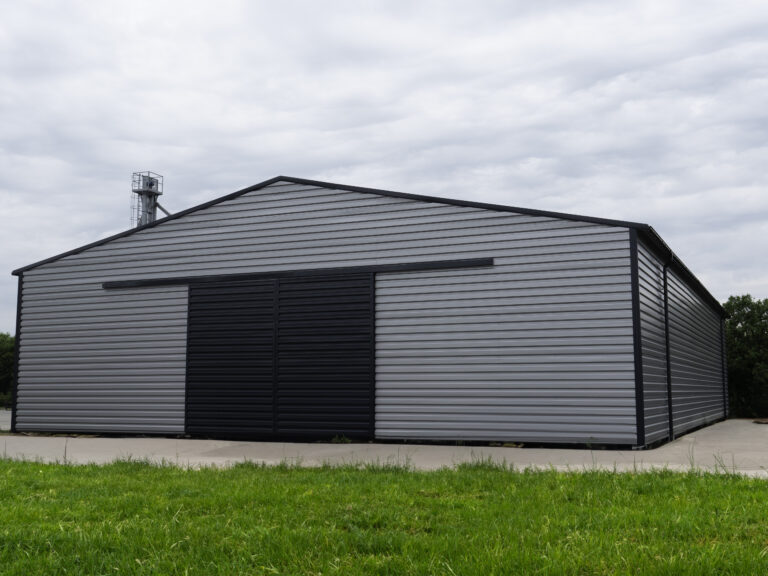
Insulated steel building – when is it a necessity, and when is it an unnecessary cost?
Choosing the right type of hall directly impacts subsequent operating costs, user comfort, and the adaptability of the space to changing business needs. An insulated steel hall is a solution that offers businesses significant flexibility – but it won't be a necessary expense in every situation. It is worth understanding when thermal insulation provides real added value and when it's better to opt for a more economical solution.
Why insulated steel halls are gaining popularity?
Observing the industrial construction market, it can be noticed that insulated steel halls are increasingly becoming the standard, rather than an additional option. This is due to growing requirements for energy efficiency and increased investor awareness. Low temperature in the hall is not only discomfort but also a threat to product quality, equipment, or employee productivity. Insulated steel halls allow for maintaining constant conditions, and the use of solutions like sandwich panels for halls significantly reduces heat loss.
Effect? Lower operating costs and greater control over the conditions inside the facility.
When is industrial hall insulation necessary? Examples of applications
Not every operation requires an insulated hall. There are, however, industries where a lack of insulation prevents the proper functioning of the facility.
Insulated hall is essential when:
- You operate year-round production with employees,
- Stored materials are sensitive to temperature and humidity,
- You plan to create office or welfare facilities in the hall,
- You provide maintenance or workshop services.
In such cases, lack of insulation can lead to downtimes, complaints, or increased energy costs.
Does an insulated hall mean higher costs? Calculate before you decide
The cost of building an insulated steel hall is higher than the classic uninsulated version. This is due to, among other things sandwich panelsadditional support structures, and the assembly itself. Many investors focus solely on the initial cost, overlooking a crucial aspect – operation. Meanwhile, well-executed insulation:
- reduces energy demand,
- stabilizes internal temperature,
- protects equipment and goods from external factors.
In the long run an insulated hall ften proves to be more cost-effective than an uninsulated version, especially in companies that use it throughout the year.
News
Why is the quality of tent hall design so important? Quality control stages at Sparkz
We work with leading companies from various industries to create solid structures. Through partnerships with brand suppliers, we can
Uninsulated Halls and Year-Round Protection of Agricultural Machinery
We work with leading companies from various industries to create solid structures. Through partnerships with brand suppliers, we can
How to plan ventilation of a production hall to meet OHS standards?
We work with leading companies from various industries to create solid structures. Through partnerships with brand suppliers, we can
Construction of an equestrian hall step by step – what does the investment process look like?
We work with leading companies from various industries to create solid structures. Through partnerships with brand suppliers, we can
5 problems that a well-planned agricultural building solves
We work with leading companies from various industries to create solid structures. Through partnerships with brand suppliers, we can
Custom Sheet Metal Building – durable space for storage, production, and more
We work with leading companies from various industries to create solid structures. Through partnerships with brand suppliers, we can
What insulation technologies are used in steel halls?
The most popular solution are sandwich panels for halls available in various variants, tailored to the specificity of the facility.
The most commonly used cores include:
- PUR – good thermal insulation, affordable price,
- PIR – better fire resistance and lower thermal conductivity coefficient,
- Mineral wool – high fire resistance and acoustic insulation.
An insulated steel hall can be additionally secured from the underside with a vapor barrier or additional insulation for floor slabs and foundations – especially in cold storage facilities or intensively heated buildings. A good steel building manufacturer will advise on the best technology for your specific application.
Sheet metal or steel hall without insulation – when is it suitable?
Metal sheet hall or steel hall is a cheaper and quicker solution to construct. It will be suitable if:
- you store equipment that does not require thermal protection,
- you run a seasonal business,
- you use the hall occasionally or only in warmer months.
Construction of uninsulated steel halls is also a popular choice in the agricultural sector – for storing machinery, wood, fertilizers, or feed. It is worth remembering, however, that any subsequent insulation of the structure may be more expensive than performing this stage immediately during construction.
How to match a facility to the specifics of the business?
The selection of the appropriate type of building depends primarily on the type of business activity conducted and its intensity.
Insulated steel halls will be suitable if:
- You operate all year round,
- You employ workers working inside the hall,
- You are concerned with minimizing heat loss and stable storage conditions.
On the other hand an uninsulated sheet metal building will be a suitable choice for a limited budget or when the building is to serve an auxiliary function. A good steel building general contractor will not only design but also help assess whether an insulation investment is truly justified and how to optimize costs.
Are you planning the construction of a hall tailored to your company's specifics? Contact us at sparkz.com.pl – we will advise, design, and realize the investment from A to Z.