
Insulated Steel Hall – When Is It a Necessity, and When an Unnecessary Cost?
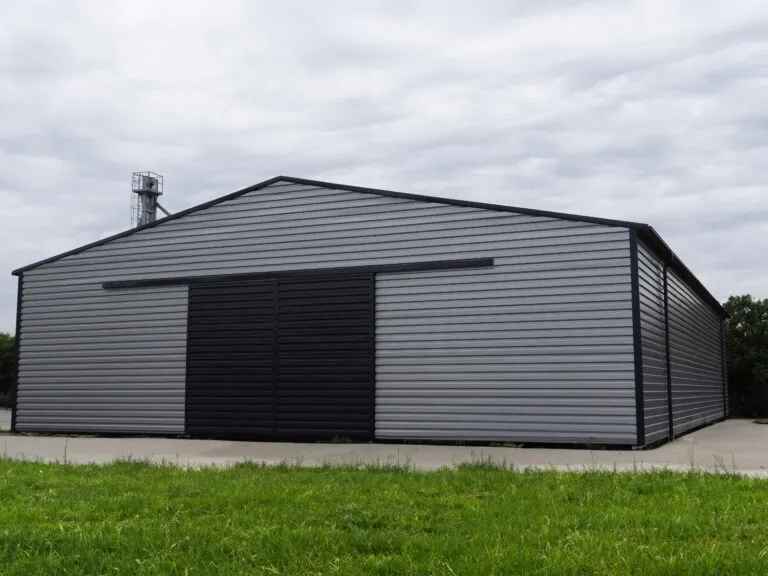
Insulated Steel Hall – When Is It a Necessity, and When an Unnecessary Cost?
Choosing the right type of hall has a direct bearing on future running costs, operational comfort, and the ability to adapt the space to evolving business needs. An insulated steel hall is a solution that offers the investor considerable flexibility – yet it is not always a necessary expenditure. It is worth understanding in which situations thermal insulation provides genuine added value, and when a more economical solution is the better choice.
Why Are Insulated Steel Halls Growing in Popularity?
Observing the industrial construction market, one can see that insulated steel halls are increasingly becoming the standard rather than an optional extra. The reasons lie in rising energy-efficiency requirements and greater investor awareness. Low temperatures inside a hall are not merely a source of discomfort – they also pose a risk to product quality, equipment, and staff productivity. Insulated steel halls make it possible to maintain consistent conditions, and the use of solutions such as sandwich panels for halls significantly reduces heat loss.
The result? Lower running costs and greater control over the internal environment of the building.
When Is Hall Insulation Essential? Examples of Applications
Not every business activity requires an insulated hall. There are, however, industries in which the absence of insulation makes it impossible to operate the building correctly.
An insulated hall is essential when:
- you carry out year-round production involving employees,
- stored materials are sensitive to temperature and moisture,
- you plan to create office or welfare facilities within the hall,
- you provide service or workshop operations.
In such cases, the lack of insulation can lead to production stoppages, warranty claims, or increased energy costs.
Does an Insulated Hall Mean Higher Costs? Calculate Before You Decide
The construction cost of an insulated steel hall is higher than that of a standard version without insulation. This is due, among other things, to the sandwich panels, additional load-bearing structures, and the installation process itself. Many investors focus solely on the initial cost, overlooking an important aspect – operational expenditure. Yet a well-executed insulation system:
- reduces energy demand,
- stabilises the internal temperature,
- protects equipment and goods from the effects of external factors.
In the longer term, an insulated hall frequently proves more cost-effective than an uninsulated version, particularly for businesses that use the building throughout the year.
News
Why Is the Quality of Tent Hall Design So Important? Quality Control Stages at SPARKZ
2025-09-11
We collaborate with leading companies from various industries, creating durable and robust structures. Thanks to our partnerships with renowned brands, we can
Non-Insulated Halls and the Year-Round Protection of Agricultural Machinery
2025-09-11
We collaborate with leading companies from various industries, creating durable and robust structures. Thanks to our partnerships with renowned brands, we can
How to Plan Ventilation in a Production Hall to Meet Health and Safety Standards
2025-09-11
We collaborate with leading companies from various industries, creating durable and robust structures. Thanks to our partnerships with renowned brands, we can
Building an Equestrian Hall Step by Step – What Does the Investment Process Look Like?
2025-07-28
We collaborate with leading companies from various industries, creating durable and robust structures. Thanks to our partnerships with renowned brands, we can
5 Problems Solved by a Well-Planned Agricultural Hall
2025-07-25
We collaborate with leading companies from various industries, creating durable and robust structures. Thanks to our partnerships with renowned brands, we can
Bespoke Steel-Clad Hall – A Durable Space for Storage, Production, and More
2025-06-23
We collaborate with leading companies from various industries, creating durable and robust structures. Thanks to our partnerships with renowned brands, we can
What Insulation Technologies Are Used in Steel Halls?
The most popular solution is sandwich panels for halls – available in various variants tailored to the specific requirements of the building.
The most commonly used core materials are:
- PUR – good thermal insulation, affordable price,
- PIR – better fire resistance and a lower thermal transmittance coefficient,
- Mineral wool – high fire resistance and acoustic insulation.
An insulated steel hall can be additionally protected on the underside with a vapour barrier or supplementary insulation of ceilings and foundations – particularly in refrigerated buildings or those that are intensively heated. A reputable steel hall manufacturer will advise which technology best suits your specific requirements.
Steel-Clad Hall or Uninsulated Steel Hall – When Does It Make Sense?
A steel-clad hall or an uninsulated steel hall is a cheaper and faster solution to realise. It is the right choice if:
- you store equipment that does not require thermal protection,
- you operate a seasonal business,
- you use the hall occasionally or only during the warmer months.
Steel hall construction without insulation is also a popular choice in the agricultural sector – for storing machinery, timber, fertilisers, or animal feed. It is worth bearing in mind, however, that retrospectively insulating the structure may prove considerably more expensive than carrying out this stage at the time of construction.
How to Match a Hall to Your Business Requirements?
Selecting the appropriate type of hall depends primarily on the nature of the business activity and its intensity.
Insulated steel halls are the right choice if:
- you operate year-round,
- you employ workers who work inside the hall,
- you need to minimise heat loss and maintain stable storage conditions.
Conversely, an uninsulated steel-clad hall is a sound choice when working to a limited budget or when the hall is intended to serve an auxiliary function. A skilled general contractor for steel halls will not only design the structure but will also help assess whether the investment in insulation is genuinely justified and how to optimise costs.
Are you planning to build a hall tailored to your company’s specific requirements? Contact us at sparkz.com.pl – we will advise, design, and deliver the project from A to Z.
Mateusz Ładosz
Sales representative